
It’s 6 p.m., and I’m walking through the quiet streets of my neighborhood as the sun sets here in Doha. Suddenly, my smartwatch beeps: “Congratulations, you’ve hit your step goal for today!” Like many others, I initially bought a smartwatch to stay on top of emails and messages, but now it’s all about achieving that daily step count.
Walking has always been a part of my life, from evening strolls with my grandfather in Paris to exploring the snowy paths of Montreal, the vibrant Rio de Janeiro, and the bustling roads of Kabul – walking has been my constant companion. This habit, or perhaps obsession, has followed me to my work at Earthna, where I’ve learned that walkable cities are more than just a personal passion—they are essential for healthier and more sustainable urban environments.
Walk for a Sustainable Future
Walking isn't just a simple activity. There is a direct connection between walkable cities and its residents' happiness. People living in walkable neighbourhoods tend to report higher levels of life satisfaction. For instance, a recent study revealed that increased social interactions, easier access to amenities, and reduced stress from traffic contribute to the overall well-being of residents in walkable urban environments.
Cities that promote walking also see significant environmental benefits, including reduced car usage, lower fossil fuel consumption, and a drop in harmful pollutants like CO2 and nitrogen oxides.
Despite these benefits, not all cities are designed to encourage walking. Since the 1950s, urban planning has often leaned toward zoning that separates industrial, residential, and commercial areas, leading to sprawling cities where people often need cars to get around. This increases reliance on cars and contributes to traffic congestion, increased pollution, and a lack of communal spaces where people can engage with their surroundings on foot.
The “15-minute city,” is an alternative concept popularized by Professor Carlos Moreno where essential services—homes, workplaces, schools, and shops—are all within a short walk. This model encourages local living, reduces car dependency, and promotes a sense of community. However, some would argue that this vision can lead to inequality, as many people cannot afford to live in inner cities or central, walkable neighbourhoods.
Lessons from the Past to Design for the Future
While these concerns are valid, it’s important to recognize that the idea of living close to what you need isn’t new. In fact, some of the world’s oldest cities, especially in hot and arid regions like the Middle East, were designed with walkability in mind[AH1] .
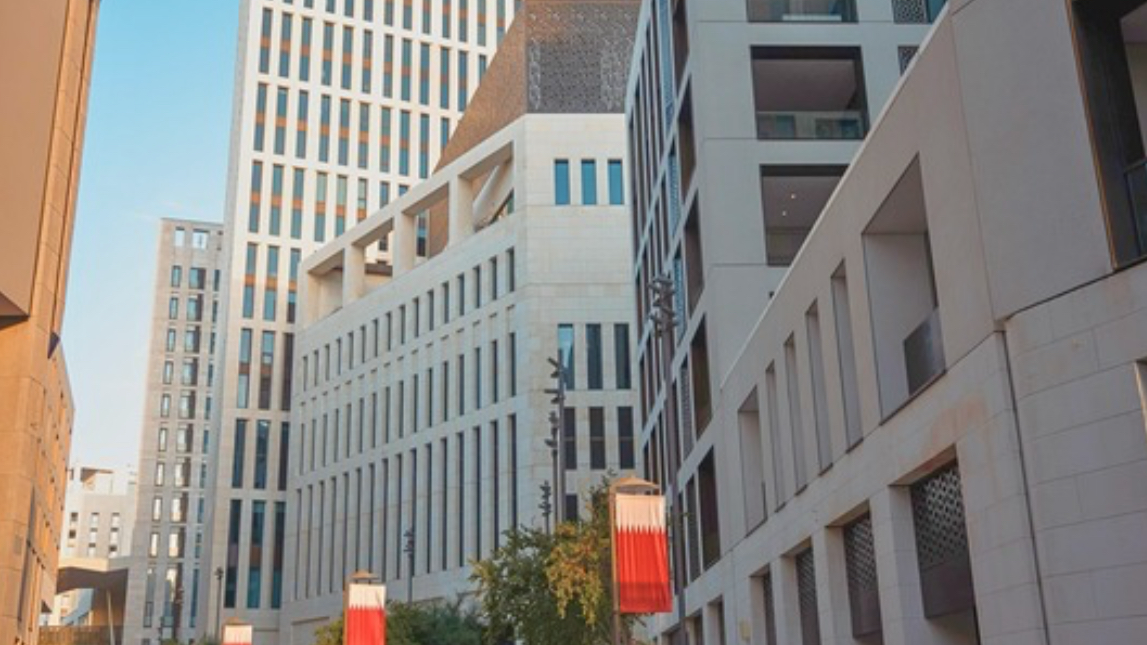
Cities such as the ancient Medinas of the Middle East or medieval European towns were designed with all aspects of daily life in proximity, ensuring that residents could navigate their cities easily. Modern cities can take inspiration from this, blending traditional planning with sustainable innovation. Here in Doha, Msheireb Downtown is a prime example. The area integrates natural shading, maximizes airflow, and places homes, shops, restaurants, and museums within walking distance. An energy-efficient tram system also reduces the need for cars[AH2] .
Globally, cities like Florence in Italy, Copenhagen in Denmark and Sydney in Australia demonstrate how walkability can be central to sustainable urban development.
Indeed, creating walkable cities isn’t easy, and it requires collaboration across policymakers, planners, and communities. At Earthna, we are working on a network of arid cities, connecting experts and city leaders to share knowledge and develop practical solutions for walkable, sustainable cities in regions facing environmental challenges.
Eager to contribute to the conversation on walkable cities? Join us at the Earthna Summit in April 2025 in Doha where sustainable urbanism will be a key focus. Visit www.earthna.qa for more information. Let’s walk the talk on creating cities that work for our communities and the planet.
By Sebastien Turbot
Director of Content
Earthna Center for a Sustainable Future